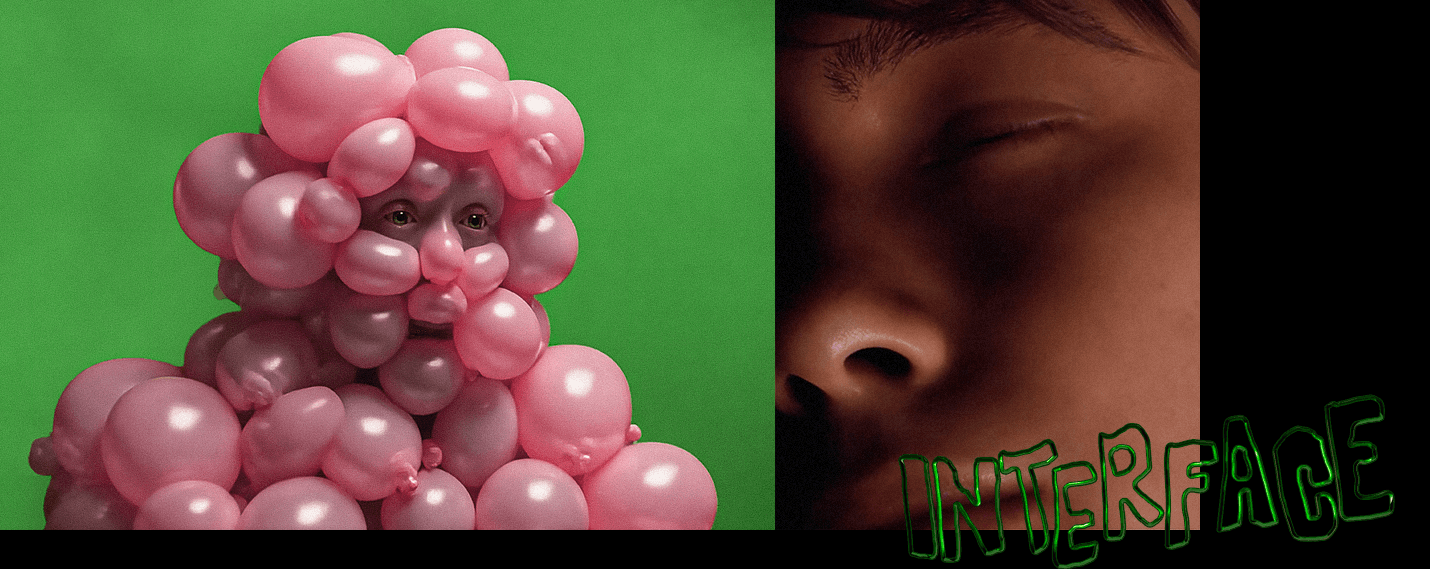
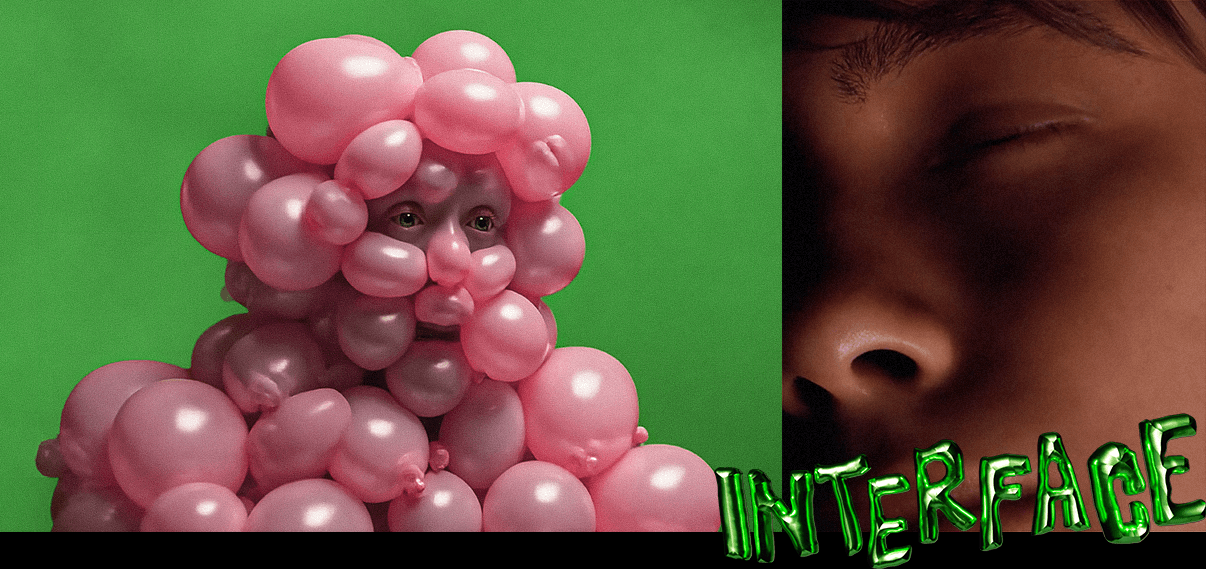

INT 02: GLITCH
An introduction to different critical perspectives, thinking about the ways in which technologies impact us socially, changing the way we relate to one another.
"Herein lies a paradox: glitch moves, but glitch also blocks. It incites movement while simultaneously creating an obstacle. Glitch prompts and glitch prevents. With this, glitch becomes a catalyst, opening up new pathways, allowing us to seize on new directions. On the Internet we explore new publics, engage with new audiences, and, above all, glitschen between new conceptions of bodies and selves. Thus, glitch is something that extends beyond the most literal technological mechanics: it helps us to celebrate failure as a generative force, a new way to take on the world."
Glitch Feminism, Legacy Russell, 2020
.
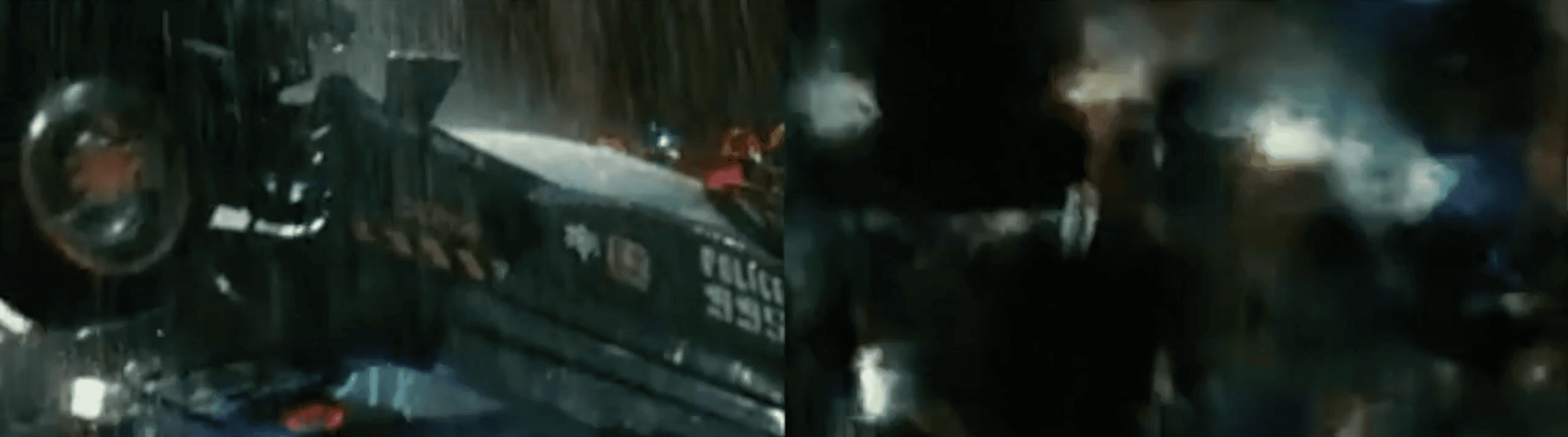
Blade Runner: Auto Encoded, Terrence Broad,

INT 03: CAPTURE
An exploration of photogrammetry and 3D capture tools, questioning the way these tools reshape our understanding of space, scale and the physical world.
“Imagine you are falling. But there is no ground. Many contemporary philosophers have pointed out that the present moment is distinguished by a prevailing condition of groundlessness. We cannot assume any stable ground on which to base metaphysical claims or foundational political myths. At best, we are faced with temporary, contingent, and partial attempts at grounding. But if there is no stable ground available for our social lives and philosophical aspirations, the consequence must be a permanent, or at least intermittent state of free fall for subjects and objects alike”
In free fall: a thought experiment on vertical perspective, Hito Steyerl, 2011

Wenqian Liu (student work)

Makar Polivinka (student work)
INT 04: SCRAPE
An investigation into how AI has changed creative practice, asking whether it generates something genuinely new or simply regurgitates what already exists.
“Scrapism is a provocation to envision and enact online technologies and practices that resist the highly privatized and exploitative present-day we b. Web scraping is an essential technique for amassing data and power. In the hands of corporations seeking profits and market share, it is a tool for commodifying open or freely shared data and piping that data into paid services built through proprietary tools, archives, and databases. However, it can b e an equally powerful technique for counteracting these very forces. We b platforms can b e broken apart, intervened in, repurposed, and reactivated. Scrapism can hold powerful entities accountable, expose their opaque operations, or illuminate their self-interested logics and motives.
Every time one of us browses the web, we leave traces in our wake. When these traces become data for ML models, they typically enact narrow commercial imperatives, strengthen surveillance, and amplify the means of repression. While this may seem like a dystopian hellscape, the fact remains that power also leaves its own digital traces. Scrapism is an invitation to engage with these traces. It attempts to reopen these opaque systems, share proprietary knowledge, leverage data against the logic of extraction, and open the structures of digital capitalism to the pub lic’s surveillance. As Berners-Lee says, “perhaps a linked information system will allow us to see the real structure of the organization in which we work.”
Scrapism: A Manifesto, Sam Levigne, 2023

The Pentagon on Fire (AI Image), 2023

The Pentagon on Fire (AI Image), 2023
INT 05: DISTORT
Digital media has opened up a space for the alternative, a container for the unusual and the strange. Online, the weird thrives, shifting our relationship to hierachies of taste, and craft
“In the light of this process, it is possible to understand one of the most interesting concepts of AI art, that of latent space. Latent space is the space of all possible attempts that the machine makes to generate new images. It is an abstract representation of all possible pictures that the AI can produce. Each picture that the artificial intelligence can ever generate occupies a position within the latent space. Latent space is “latent” because it is hidden inside the AI, until humans ask the machine to show what picture corresponds to a particular point in the space. What is important in this context is that the artist can move through the latent space and always find new images."
Creativity in the Light of AI
Fabio Fossa, Caterina Moruzzi, Mario Verdicchio, 2022
Xinyu Xiong, Wenqian Liu (student work)
INT 06: PERFORM
Exploring the relationship between the body and the camera, examining how the spectating lens produces performativity. Reflecting on media histories to explore new types of embodiment in virtual space.
“The rendered body is pure possibility, but it has been treated with an imaginatively limited lens that belies its potential for radical reimagining. Digitally rendered bodies are spaces of pure possibility. What a digitally rendered “body” can be is as diverse as the narratives and worlds dreamed up for them to inhabit."
The Rendered Body
Alison Lanier, 2022
Selût Türkü Birben, Reece Heron (student work)
INT 06: SITUATE
Situating the critical perspectives and methodologies developed throughout the term in a moment of collective broadcast, understanding how the topics covered connect, inform and shape one another.
Broadcast Film Sample